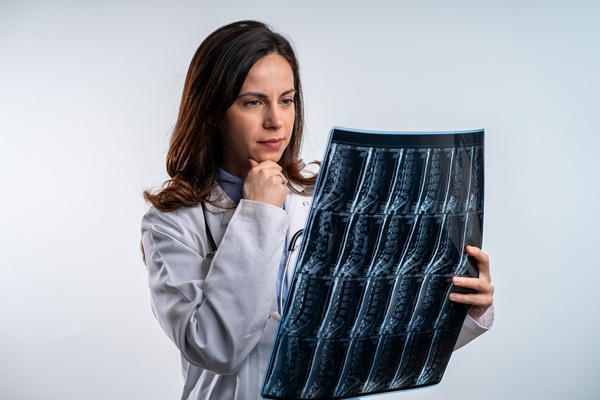
XLIF is a minimally invasive option for certain lumbar spine disorders, accessing the disc space from the side of the body. XLIF reduces muscle disruption around the back and can shorten hospital stays compared with traditional open surgery. Surgeons use this approach to treat degenerative disc disease, spondylolisthesis, and scoliosis when conservative care no longer provides relief. A careful exam, imaging, and discussion of goals determine whether this technique aligns with a patient’s anatomy and symptoms.
How XLIF works
During an XLIF procedure, the surgeon positions the patient in the lateral decubitus position and uses a small incision to pass specialized instruments through the psoas muscle to the disc. Neuromonitoring tracks nearby nerves in real time to help guide safe passage. After removing damaged disc material, the surgeon inserts a spacer to restore disc height and help open narrowed nerve channels. The spacer holds the corrected alignment while the bone grows across the treated level.
Many surgeons add supplemental fixation from the back or side to improve stability, depending on the case. This targeted path limits disruption to the posterior muscles, which may support a smoother early recovery.
Who may benefit
A structured evaluation identifies candidates who match the anatomical corridor required for XLIF. Physicians review symptoms, imaging, and prior treatments, then discuss expected benefits and limitations. Candidates often present with:
- Persistent leg pain or numbness from nerve compression
- Low back pain related to disc collapse or instability
- Difficulty standing upright due to coronal or sagittal imbalance
- Limited relief after focused physical therapy, medications, and injections
These features suggest a mechanical problem that surgical stabilization may address. The care team also considers bone quality, vascular anatomy, and prior abdominal or lateral surgery before recommending XLIF.
Recovery timeline and expectations
Most patients walk the day of surgery with guidance from the care team. Early movement promotes circulation, reduces stiffness, and supports confidence. Soreness near the incision and along the hip flexors usually improves over several days. A gradual return to activity follows—light walking first, then structured physical therapy when directed. Surgeons monitor healing with exams and imaging, adjusting restrictions as fusion progresses. XLIF aims to reduce nerve irritation, restore alignment, and improve function; however, outcomes vary with diagnosis, overall health, and adherence to postoperative guidance. Clear communication with the surgical team helps establish expectations for milestones at two, six, and 12 weeks.
Plan a spine consultation
XLIF expands the toolbox for treating select lumbar conditions, offering lateral access that limits posterior muscle disruption while restoring disc height and alignment. A spine specialist will review goals, imaging, and risk factors, then compare lateral, posterior, and anterior approaches to select the technique that best matches the diagnosis. When XLIF is appropriate for the anatomy and treatment plan, coordinated perioperative care, including education, early mobility, and graduated activity, supports a steady return to work and family routines. For more information or to schedule an appointment, call our office.
To schedule a consultation, please request an appointment on our website at https://arizonaneurosurgeon.com or call Randall Porter, M.D. at (602) 603-8951 to arrange an appointment at our Phoenix office.
Check out what others are saying about our services on Yelp: Read our Yelp reviews.
Recent Posts
Facial reanimation restores movement and symmetry after nerve injury, paralysis, or congenital facial weakness. A neurosurgeon focuses on rebuilding both form and function through microsurgical techniques that reconnect or replace damaged facial nerves and muscles. Facial reanimation aims to return natural movement, emotional expression, and facial balance, helping patients regain confidence and comfort in daily…
Spondylolisthesis occurs when one vertebra in the spine slips forward over the one below it, and understanding treatment helps patients make informed decisions about pain relief and mobility. This condition can cause mild to severe lower back pain, leg pain, stiffness, or even changes in posture and walking patterns. Understanding the full range of treatment…
Hemifacial spasm is a neurological condition that causes involuntary twitching or contractions on one side of the face. These spasms may begin near the eye and gradually affect surrounding muscles, including the cheek and mouth. While the condition is not typically life-threatening, it can significantly impact daily life and emotional well-being. Hemifacial spasm treatment focuses…
A herniated lumbar disc occurs when the soft center of a spinal disc pushes through a tear in the outer ring, often irritating nearby nerves. Early attention helps reduce pain and protect nerve function. Patients may experience sharp low back pain, radiating leg pain (sciatica), numbness, or weakness. A neurosurgeon evaluates symptoms, reviews imaging studies,…